If you work in aeronautics support, retail, building, social work, or you just care for family and neighbours, understanding just how to act in an emergency adjustments end results. Jandakot sits within an active suburban and industrial catchment, with small airports, workshops, and homes linked. That makes obtainable, functional first aid and CPR training essential. This overview discusses what to get out of a first aid and CPR course Jandakot, exactly how to pick the right supplier, what abilities you will leave with, and exactly how to keep proficiency over time.
Why regional training matters
Training that really feels remote or academic seldom sticks. When the teacher knows neighborhood hazards, office norms, and regular call-out circumstances, discovering becomes right away useful. In Jandakot that implies trainers that reference aircraft ramp events, chemical exposure from small workshops, heat-related concerns throughout hot months, and reactions appropriate for household streets with variable ambulance reaction times. A course that makes use of examples you could in fact see assists pupils keep in mind the sequence of actions and the reasons behind them.
What a typical first aid and CPR course in Jandakot covers
Courses differ by supplier and certification level, but a strong first aid and CPR course Jandakot will integrate hands-on experiment scenario-based discovering. Anticipate modules on grown-up CPR, kid and baby CPR where pertinent, use of a computerized external defibrillator or AED, management of choking, treatment for blood loss, burns and cracks, recognition of stroke and heart attack, shock administration, and fundamental wound care. Practical sessions will certainly call for repetitive, monitored technique of compressions and air flows on manikins till strategy is correct.
Providers commonly line up training to across the country identified systems, so companies can rely on the certificate. For work environment conformity, try to find courses that map to the across the country identified unit HLTAID011 Give first aid or its present matching, and HLTAID009 Provide cardiopulmonary resuscitation. If you need a greater level of medical first aid, some companies provide HLTAID012 Provide First Aid in an Education and Treatment Setting or customized courses for risky industries.
How long the courses take and how they first aid certificate course are delivered
A basic consolidated first aid and CPR course will usually compete one full day, around 6 to 8 hours, consisting of breaks. Much shorter refresher course sessions exist for individuals that already hold a current certificate; those commonly run 2 to 3 hours to restore CPR competence and revise key first aid skills. Online concept complied with by an evaluated in person sensible session is a common style. That blended technique lets you full expertise checks at your very own pace while ensuring hands-on skills are evaluated in person.
What you will actually have the ability to do after the course
Completing a first aid and CPR course in Jandakot should leave you with confident, sensible skills: you will have the ability to carry out efficient upper body compressions and rescue breaths, run an AED, control extreme bleeding utilizing direct stress and dressings, immobilise presumed fractures, acknowledge and act upon stroke or cardiovascular disease signs, and treat burns and small wounds. Significantly, you should likewise gain evaluation abilities: exactly how to prioritise hazards, call for aid efficiently, and offer a concise handover to emergency situation solutions. Those soft skills typically make one of the most distinction when several injuries are present or when the scene is dynamic.
Choosing the best service provider: what to ask and watch for
Not every first aid course is equal. Ask potential carriers the complying with when you contact them:
- whether their certifications map to country wide recognised systems and which ones the ratio of pupils to instructor throughout sensible sessions whether practical analysis remains in individual or on the internet only whether AEDs and police or ambulance scenarios are consisted of in practice whether they offer office or group training at your site
A training session with a high pupil to instructor proportion will certainly restrict hands-on technique. For CPR skills, go for a useful ratio no bigger than 8 trainees per teacher. Examine that manikins and AED trainers are in excellent condition. A good trainer will stress technique over memorizing steps, appropriate stance to avoid rescuers' fatigue, and just how to adapt compressions for children or individuals with bigger bodies.
What to bring and practicalities on the day
Arrive prepared and comfy. Bring evidence of identification if you need an official certificate, use loosened garments suitable for practical job, and bring a light lunch. If the provider allows on the internet pre-course reading, complete that prior to attending.
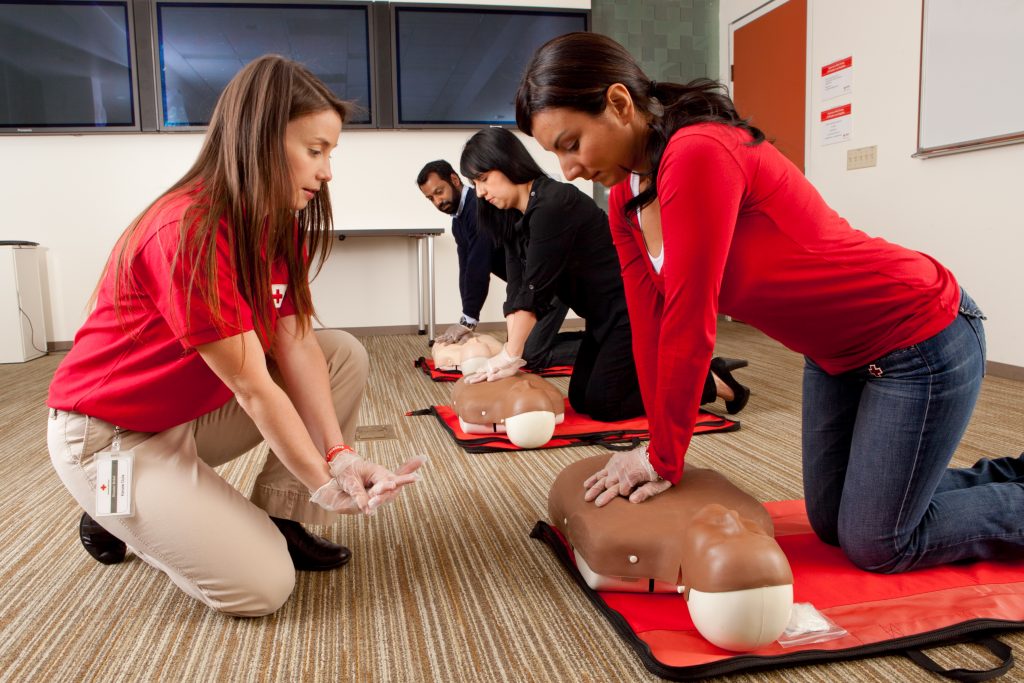
Checklist for participating in a first aid and CPR course Jandakot
- proof of identity for qualification purposes comfortable clothes appropriate for stooping and moving any work environment kinds your company requires for training records completed pre-course concept if supplied online payment verification or employer authorisation if required
Real-world examples that reveal the value of training
A pal that functions airside once described tipping off the tarmac to an associate who had broken down. Trained staff right away inspected responsiveness, required emergency services, positioned the individual supine, and began CPR while one more obtained an AED from a nearby vehicle. Due to the fact that those responders had practised compressions under timed circumstances throughout their first aid training, they revolved rescuers every two mins to avoid tiredness. Emergency situation services reported the fast handover and use of an AED when they got here. That person survived and went back to function months later.
A neighborhood childcare instructor I trained with shared a various story. Throughout a morning session a toddler stumbled and suffered a deep laceration. The educator used a straightforward stress clothing taught throughout the course, kept the child calm, and connected the event clearly to the moms and dad and emergency situation personnel. The wound was stitched however the swift, tranquil response prevented higher blood loss and reduced distress. Stories like these emphasize that the most essential skill is the capacity to remain systematic under stress, something well-designed first aid and CPR courses build with drills and scenario practice.
CPR method and usual mistakes to avoid
Good CPR is about deepness, price, and marginal disturbances. Go for upper body compressions at a price of concerning 100 to 120 compressions per min, pressing to a depth of around 5 to 6 centimetres in grownups. Let the breast recoil entirely between compressions so the heart refills. Stay clear of the usual errors of shallow compressions, stopping briefly as well long to examine pulse, or pressing just with the wrists. If you are the rescuer without breath training or throughout a transmittable condition issue, continuous breast compressions alone are better than doing nothing.
Step-by-step emergency CPR sequence
Check responsiveness and call for aid, activating emergency services Open the airway and examine breathing for as much as 10 seconds If not taking a breath usually, start breast compressions immediately After 30 compressions, offer 2 efficient rescue breaths if trained Continue cycles and use an AED as soon as it is availableRecognising constraints and when to call an ambulance
An usual inquiry from students is when to rise. If there is any kind of uncertainty concerning the seriousness of an injury, telephone call emergency solutions. Substantial bleeding that saturates through a clothing, respiratory tract compromise, modified awareness, thought spine injury with neurological indicators, signs of stroke, breast pain with sweating and queasiness, and breathing problems are all reasons to call 000 instantly. Also if you are managing the instant trouble, advanced treatment is generally needed. First aid is a bridge to expert care, not a replacement.
Refresher training and keeping competence
Skills degeneration is actual. Research studies and useful experience show that upper body compression quality reduces within months without technique. For work environment conformity, certifications commonly last three years for first aid and one year for CPR, yet that does not indicate abilities stay sharp for that whole period. Consider a CPR correspondence course Jandakot every 6 to twelve months if you are most likely to be the assigned rescuer. Short, focused practice sessions with comments on compressions and air flows help preserve muscular tissue memory.
Custom and progressed alternatives in Jandakot
Many training organisations give bespoke courses for markets such as aeronautics, hospitality, or child care. If your workplace has certain risks, tailored web content can include chemical direct exposure action, using oxygen therapy tools, or comprehensive discharge practice sessions. Some providers also offer an advanced first aid course that consists of intravenous accessibility recognition, advanced bleeding control with tourniquets, and prolonged casualty evaluation. If your workplace requires particular paperwork, request a tailored course that creates details reporting layouts or incident paperwork forms.
Cost and accreditation considerations
Prices differ relying on whether you go to a public open course or set up on-site training for a team. Anticipate to pay from moderate to greater arrays depending on amenities, a recognised national system of competency, and whether products are consisted of. Team bookings commonly reduce per-person price. Constantly inspect that the certificate is provided by a Registered Training Organisation if you call for nationally recognised accreditation. For laid-back students that require a non-accredited alternative, community first aid sessions might be more affordable but will not count for office compliance.
How to prepare mentally and psychologically genuine incidents
Training covers physical actions, however the emotional element is often ignored. A reliable course will certainly consist of stress first aid and cpr courses jandakot shot through realistic situations that present sound, time pressure, and several casualties. Practising a short manuscript for calling emergency situation solutions and succinct declarations for spectators decreases stumbling during an actual occasion. Emotionally practicing the top priorities of safety, breathing, blood loss, and calling for assistance installs a dependable decision tree. After a substantial event, debrief with colleagues and think about formal counselling if the occasion affects your psychological health.
Local logistics and how to find a course
Search for first aid training Jandakot or cpr course Jandakot to find local suppliers. Compare course details, check out testimonials, and validate recognition of the certification. Lots of suppliers message upcoming public course dates online and enable team reservations on company sites for comfort. If you need training outdoors company hours due to change work, inquire about evening or weekend choices. Federal government and office safety bodies also detail accepted training companies in the Perth urbane area.
Final choice factors: what matters most
When choosing a first aid and CPR course in Jandakot, 3 aspects matter most importantly. First, hands-on exercise with small teacher teams to develop skilled strategy. Second, country wide acknowledged accreditation if you need workplace compliance. Third, scenario-based mentor that reflects regional threats so you gain functional judgement, not simply rote actions. Timing and expense are important, yet not at the expense of practice time and trainer quality.

If you leave the course able to use pressure confidently, start upper body compressions readily, operate an AED, and communicate clearly with emergency situation solutions and spectators, you have gained valuable capability. In the worst-case scenarios, those abilities shorten the gap in between an incident and life-saving specialist care.
Where to go next
After qualification, consider these steps: routine brief practice sessions every three to six months, maintain your workplace first aid set stocked and visible, determine the local AED places in your neighbourhood or office, and encourage colleagues to educate also. Cumulative preparedness creates strength. In a community like Jandakot, a few experienced individuals make a genuine difference when minutes matter.
